Authors

Airton Pollini
Archaeologist and historian specializing in the ancient Greek world, teaching at the Université de Haute-Alsace in Mulhouse, France. He co-edited La Question de l’espace au IVe siècle av. J.-C. dans les mondes grec et étrusco-italique with Sophie Montel, published by Presses Universitaires de Franche-Comté in 2018.

Anita Fattori
She holds a PhD in Social History from the University of São Paulo, where she is currently a postdoctoral researcher and a FAPESP fellow. She is the author of the book Tecendo a trama social: mulheres e redes comerciais no período paleoassírio (Intermeios, forthcoming). She is a member of the "The Subaltern and the Popular in Antiquity Antiquity" research group.

Carlos Machado
He is a historian and professor at the University of St Andrews in Scotland, specializing in Late Antiquity, with a particular focus on Rome and Italy. He is the author of Urban Space and Aristocratic Power in Late Antique Rome (Oxford University Press, 2019) and co-editor of Poverty in the Ancient Greece and Rome (Routledge, 2023).

Cristina Rosillo López
She's a historian and professor of Ancient History at Universidad Pablo de Olavide in Spain, delving into the political culture and social and economic history of Ancient Rome. She is the author of Public Opinion and Politics in the Late Roman Republic, published by Cambridge University Press in 2017.

Cyril Courier
He's a historian and professor of Roman History at Aix-Marseille Université in France. His research spans the social and economic history of ancient Rome, Roman epigraphy, and popular culture. He is the author of La plèbe de Rome et sa culture (EFR, 2014) and co-editor (with Julio Cesar Magalhães de Oliveira) of Ancient History from Below (Routledge, 2022).

Delphine Driaux
She's an Egyptologist and archaeologist, serving as the deputy director of the Middle Egypt Project at the University of Vienna. She leads the project "Representations and reality of poverty in ancient Egypt", funded by the Austrian Science Fund (FWF), based at the University of Vienna. She is the author (with Marie-Lys Arnette) of the book Instantanés d'Égypte (Ifao, 2016).

Erica Angliker
She's an archaeologist and researcher at the Institute of Classical Studies at the University of London. Currently, she's in the process of preparing the publication of her thesis, which focuses on the cult of gods and heroes on the Cycladic islands during the archaic and classical periods. Her research explores the cultic practices of shepherds, travelers, and other groups outside the polis.

Fabio Augusto Morales
He's a historian and professor of Ancient History at UFSC. His research focuses on the roles of foreigners and slaves in Athenian democracy and Greek cities during the Hellenistic period, approached from the perspective of Global History. He's the author of A Democracia Ateniense pelo Avesso, published by Edusp in 2014.

Fabio Duarte Joly
A historian and professor of ancient history at UFOP, he studies the social and economic history of Rome, particularly the issue of slavery. He is the author of, among other works, A Escravidão na Roma Antiga (Alameda, 2005) and Libertate opus est: escravidão, manumissão e cidadania à época de Nero (Editora Progressiva, 2010).

Filipe Noé Silva
He holds a PhD in Cultural History from Unicamp and is a professor at UDESC. He studies slavery and society in imperial Rome and its provinces. He is the author of the book De escravos a benfeitores: os libertos e a munificência na Península Ibérica, published by Pedro & João Editores (2021).

Gabriel Cabral Bernardo
Holding a PhD in Social History from USP (defended in 2025), with research on the use of the sea and coastal regions of Laconia from the Archaic Period to the beginning of the Hellenistic Period, he is currently a substitute professor of Ancient History at UFSC. He is the author of the book Comandantes e Covardes: Honra e mérito em Esparta (Intermeios, 2020).

Giovanni Pando Bueno
Master's degree in Social History from USP (University of São Paulo) with a dissertation (defended in 2023) on visuality and memory in the political disputes of Rome during the times of Caesar and Augustus. Member of the Laboratory for Near Eastern Studies (LAOP/USP).

Jean-Pierre Guilhembet
Professor of Roman History at the Université Paris Diderot - Université de Paris and vice-president of the Société Française de Histoire Urbaine. He studies ancient urban history, particularly that of the city of Rome, a subject on which he has published numerous articles and book chapters.

Jonathan Cruz Moreira
Master's degree in History from the Federal University of São Paulo (2019) and PhD candidate in History at PPGH - UNIRIO, with a CAPES scholarship. Studies forms of popular participation and collective action in Rome at the end of the Republic and memory in ancient Rome.
_JPG.jpg)
José Knust
He holds a PhD in History from the Federal Fluminense University and is a History professor at the Federal Fluminense Institute. He is the author of Senhores de Escravos, Senhores da Razão: racionalidade e ideologia na escravidão rural romana (séc. II-I a.C.) (Essentia, 2024).

Juliana Marques Morais
She holds a PhD in Social History from the University of São Paulo. Her thesis focused on the process of demonizing religious adversaries in North Africa between the 4th and 5th centuries AD.

Kostas Vlassopoulos
Historian and professor of Ancient History at the University of Crete. He studies the history of slavery and intercultural encounters in Antiquity, among other topics. He is the author of Unthinking the Greek Polis , published by Cambridge UP (2007), and Historicising Ancient Slavery , published by Edinburgh UP (2021).
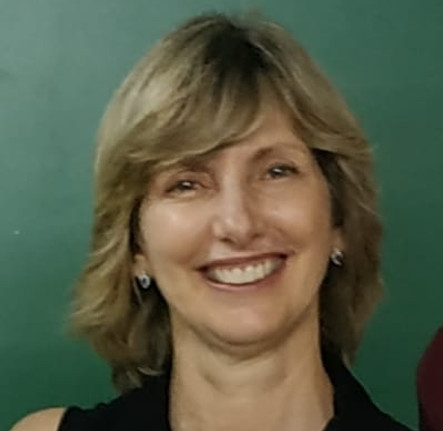
Lourdes Conde Feitosa
She holds a PhD in Cultural History from Unicamp and is a professor at Unisagrado. She has dedicated herself to the study of Pompeii graffiti, focusing on sexuality and gender relations. She is the author of the book *Love and Sexuality: the masculine and the feminine in Pompeii graffiti* , published by Annablume (2005).

Lucy Grig
Historian and professor of Roman History at the University of Edinburgh (Scotland). She studies the birth of hagiography, cultural history, and popular culture in the Roman world. She is the author of the book Popular Culture and the End of Antiquity in Southern Gaul, c. 400–550 , published by Cambridge University Press (2024) .

Marcos Leitão de Almeida
Historian and professor of African History at USP. He studies slavery practices in the Lower Congo over the long term using linguistic methods and archaeological and documentary sources. He is the author of the book Quebrando o Silêncio: a longa história da escravidão no Baixo Congo (Vozes, 2024).

Matheus Treuk
Historian and archaeologist, he is a professor of Archaeology of Antiquity at UERJ. A scholar of Persian Egypt and the Achaemenid Empire, he coordinates the Achaemenid Studies Group – Parsa.

Nara Oliveira
A graduate in History from USP, she is the author of the blog Leituras de uma Historiadora on Instagram. She researched the transformations in the forums of Lepcis Magna (North Africa) in Late Antiquity. She was the editor of the Interviews section of the blog.

Pedro Benedetti
Holds a PhD in Social History from USP. He studied the relationships between Roman populations and barbarians in Gaul during the 4th and 5th centuries AD. He is the translator of Ammianus Marcellinus's Histories (Book 31) and the Anonymus Valesianus, published by Editora CRV (2016).

Pedro Paulo Funari
Historian and archaeologist, he is a Full Professor of Ancient History at Unicamp. He is the author and co-author of hundreds of articles and over a hundred books, including Cultura Popular na Antiguidade Clássica (Contexto, 1989), Historical Archaeology: Back from the Edge (Routledge, 1999), and Grécia e Roma (Contexto, 2002).

Renata Senna Garraffoni
Historian and full professor of Ancient History at UFPR. Her research interests lie in the Roman Empire, and she has studied the lives of ordinary people, the graffiti of Pompeii, and gladiators. She is the author of the book Gladiadores na Roma Antiga (2nd ed., UFPR, 2021) and co-editor (with M. Garcia Sánchez) of Mulheres, Gênero e Estudos Clássicos (UFPR/Univ. Barcelona, 2020).

Thais Rocha da Silva
Egyptologist and archaeologist, she holds a doctorate from the University of Oxford and is a professor at UFMG. She was a Research Fellow at Harris Manchester College (University of Oxford). She is a member of LAOP/USP and the Amarna Project. Her research focuses on the dwellings and domestic spaces of the ancient Egyptians during the New Kingdom (c. 1550–1069 BCE)